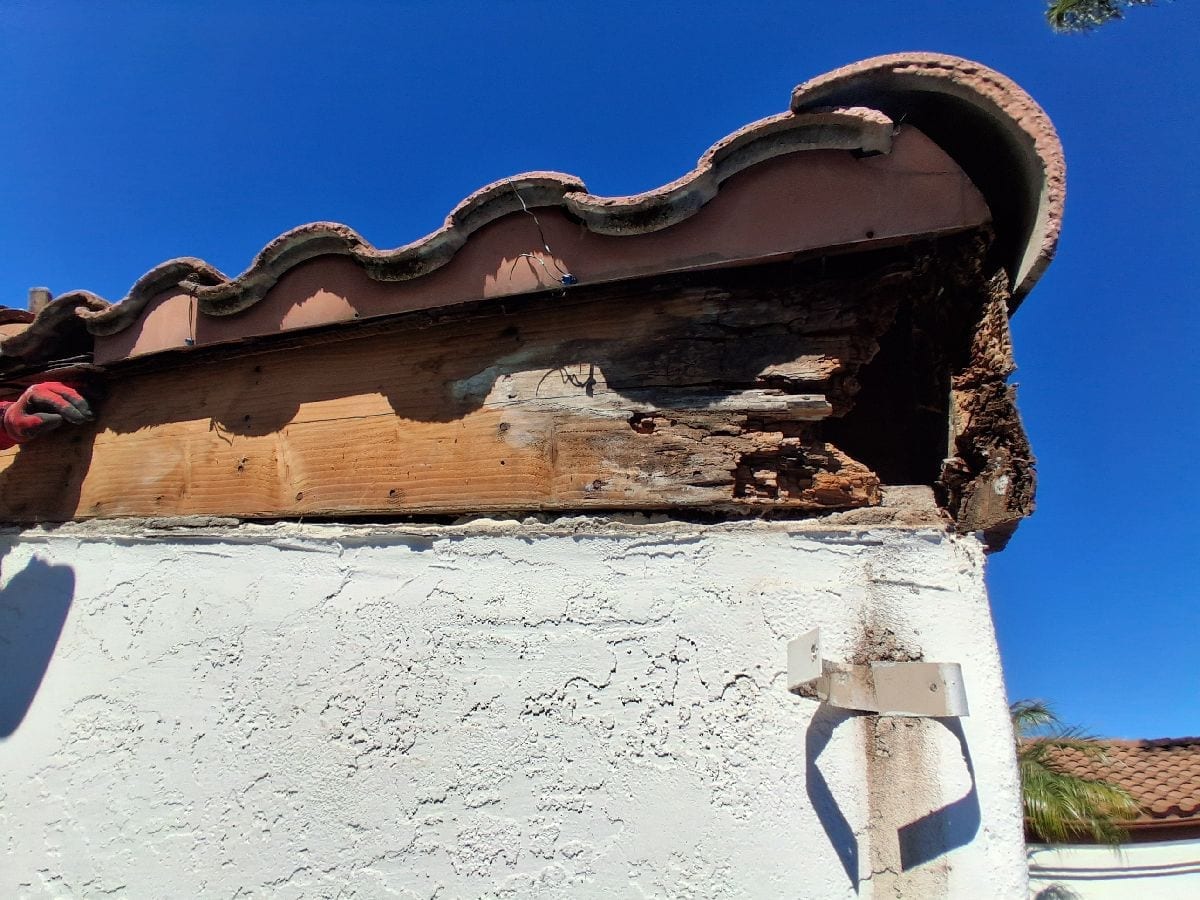
Review the roof-edge water path
Look at the gutter run, outlets, downspouts, roof edge, flashing transitions, and staining below. Overflow, water behind a gutter, loose attachment, or another transition can repeatedly wet fascia and adjoining finishes. A visible gutter issue may contribute without being the only source. The review should state which components are accessible and which roof or flashing conditions require another qualified trade or additional access.
Define removal and temporary protection
Wood repair may require gutter removal, trim removal, limited roofing access, soffit opening, or stucco and paint disturbance. The proposal should name these limits and state how an opened area will be protected between steps. Broad demolition based only on a photograph creates avoidable uncertainty; opening work should be deliberate, documented, and tied to the questions that affect repair decisions.
Evaluate wood and attachments
Once the approved area is exposed, document the condition of fascia, subfascia, rafter tails, blocking, fasteners, and adjacent materials that are actually visible. The required repair depends on function and remaining sound material. Structural or engineered questions should be routed to appropriate qualified review for that property rather than answered with a generic detail.
Coordinate gutter and flashing work
Replacing wood without planning how the gutter, roof edge, flashing, and discharge return can recreate the same exposure. The written scope should distinguish gutter reset or replacement, flashing work, roof access, outlet changes, and downspout routing. It should also state which items are excluded so the owner understands whether the proposal addresses the complete observed path or only one component.
Restore soffit, stucco, and paint
Patch-back work should follow the water-control and wood repair, not cover an unresolved opening. Define soffit materials, stucco or siding limits, primer, coating areas, sealant joints, and matching expectations. Aged colors and textures may not match exactly. Clear limits are especially useful when only one roof-edge section is repaired beside older surrounding finishes.
Document changes before continuing
If opening work reveals deterioration beyond the agreed area, photograph it, explain the effect on the planned work, and prepare a written change. Do not treat every newly visible mark as automatically included. The owner needs a clear distinction between the original visible-condition scope and additional work required by concealed conditions, access changes, or code-related findings.
Prepare useful owner decisions
Before approval, give the owner a drawing or clear location description, the initial repair boundary, included related trades, and the process for concealed conditions. Note whether gutter work, roofing access, paint beyond the patch, or special equipment is excluded. This turns a general concern about rotten fascia into a decision that can be priced, scheduled, and verified against the completed work.
Roof-edge wood repair should return the wood, water-control details, attachments, and finishes as one coordinated scope.
Continue planning
Dry Rot Beside Stucco, Windows and Roof Edges
See how wood, stucco, openings, roof edges, and flashing interact when moisture damage crosses several exterior finishes.
Read the guideAWC Evidence: Fascia Rot and a Leaking Window
See what one AWC fascia-rot and window-leak case teaches about connected roof-edge water, wood exposure, and repair planning.
Read the project notes