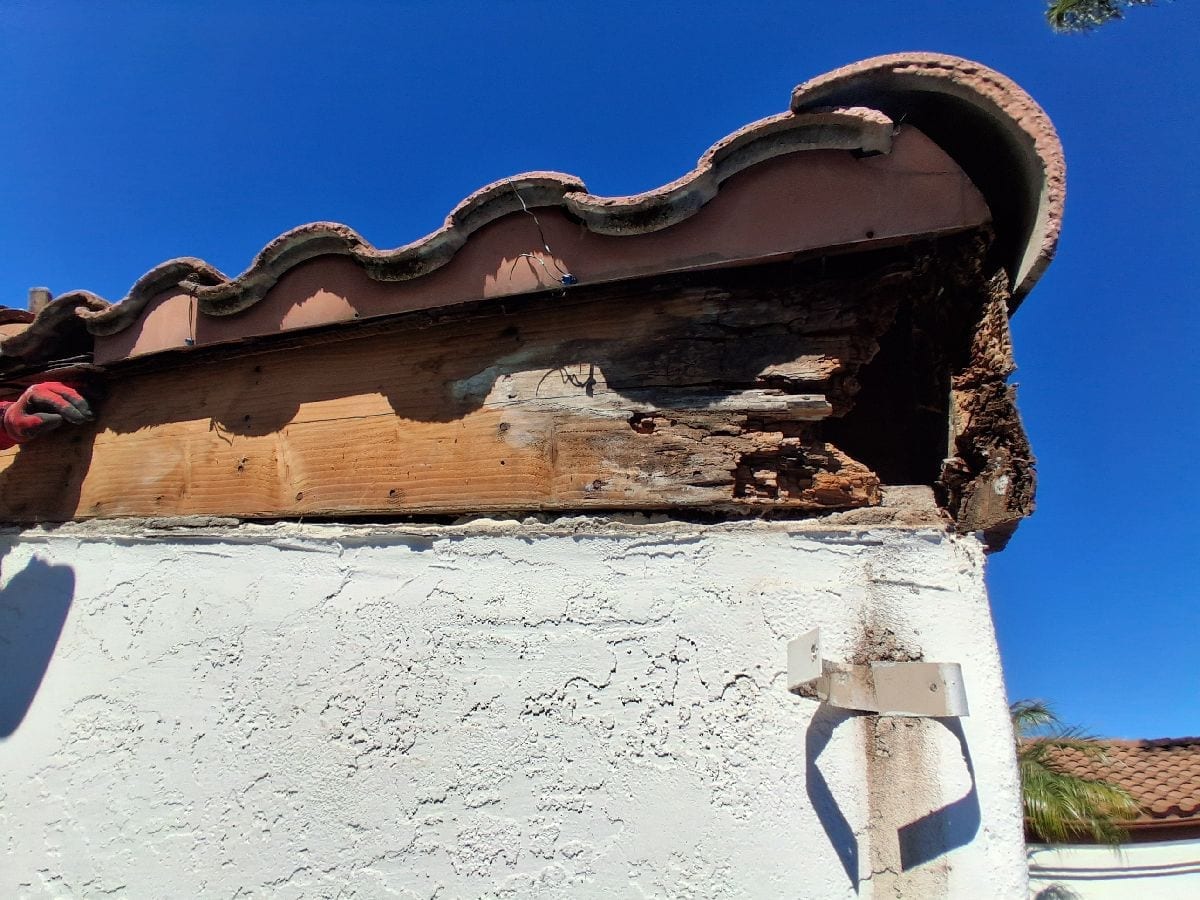
Start with observations, not labels
Record exactly what is visible: softness, missing material, cracking, staining, open joints, peeling coating, loose fasteners, or movement. Note whether the area is beneath a roof edge, beside an opening, near a deck surface, or below plumbing. Calling every stain dry rot can steer the scope too early. Clear observations allow the repair team to compare the damaged area with likely water paths and adjacent materials.
Notice when the condition changes
Timing can distinguish useful patterns without proving a cause. Note whether staining grows during wind-driven rain, after steady rain, during irrigation, when a fixture is used, or regardless of weather. Include how long the condition has been noticed and whether a prior patch changed it. Weather and use history help determine which accessible areas deserve review first and whether an active leak needs separate immediate protection.
Photograph the context safely
Take one wide photograph that shows the damaged area in relation to the roof, gutter, wall, window, deck, or ground. Add close views from a safe standing location and photograph the area below where water travels. Do not climb, press on elevated wood, or remove finishes. A useful photo set explains the assembly; a tight image of one soft spot may hide the path that matters.
Check prior work and records
Collect invoices, proposals, maintenance notes, leak reports, and photographs from earlier repairs. A recurring patch may reveal that a surface finish was addressed while an upstream transition remained open. Records also help distinguish owner-approved work from resident recollection. They cannot confirm current concealed conditions, but they reduce guesswork and help define what should be verified during a paid evaluation.
Choose the appropriate next step
A small, accessible trim condition with a known source may support a focused repair conversation. Repeated leakage, multi-trade damage, elevated access, occupied interiors, unclear origin, or broad finish removal usually deserves the $250 Site Evaluation + Written Bid Package. The evaluation creates a written basis for pricing and is credited toward approved work when approved within 30 days.
Keep authorization and access separate
For rentals, apartments, and HOA properties, identify the owner or manager authorized to approve evaluation and construction. Separately record the resident or tenant who can coordinate entry, pets, gates, parking, and available times. Resident access does not authorize scope or price. That separation prevents delays and protects private contact information from being used outside the specific access purpose.
Describe what changed, where it sits, and when it appears; then let site evidence determine the scope.
Continue planning
Opening Work, Hidden Damage and Change Orders
Plan exploratory removal, documentation, protection, and owner decisions when dry-rot extent is concealed.
Read the guidePreventing Repeat Moisture Damage After Wood Repair
Build maintenance and observation around the actual water path after a dry-rot repair, without unsupported promises.
Read the guide